Russell Tovey Anchors an Hour of Pure, Controlled Dread
Joe “How will anyone find out?”
Friend “When they see me breaking in, they’ll call the police”
Joe “You are the fucking police!”
c
There is a particular kind of theatrical dare in building an entire evening around one actor, a desk and a telephone: no scene partner to bounce off, no costume change to signal a shift in circumstance, nothing but voice, face and the smallest physical tell to carry an audience through sixty unbroken minutes. Gustav Möller’s Danish film Den Skyldige pulled the trick off on screen by keeping its camera locked on a single face while chaos unspooled down a phone line. Chloë Moss’s stage adaptation, directed by Felix Barrett at the Donmar Warehouse, takes the same dare and somehow makes it feel even more dangerous, because now there is nowhere for the illusion to hide.
Joe (Russell Tovey) is a police officer, temporarily reassigned to answering emergency calls after some unspecified professional disgrace we are left to piece together in fragments: a hearing looming, a wife who will not take his calls, a daughter he only gets to speak to in stolen minutes. He is brusque with the timewasters and weary with the drunks, and it is only when a woman named Emily rings, seemingly abducted and unable to speak freely, that the evening tightens its grip and does not loosen it again.
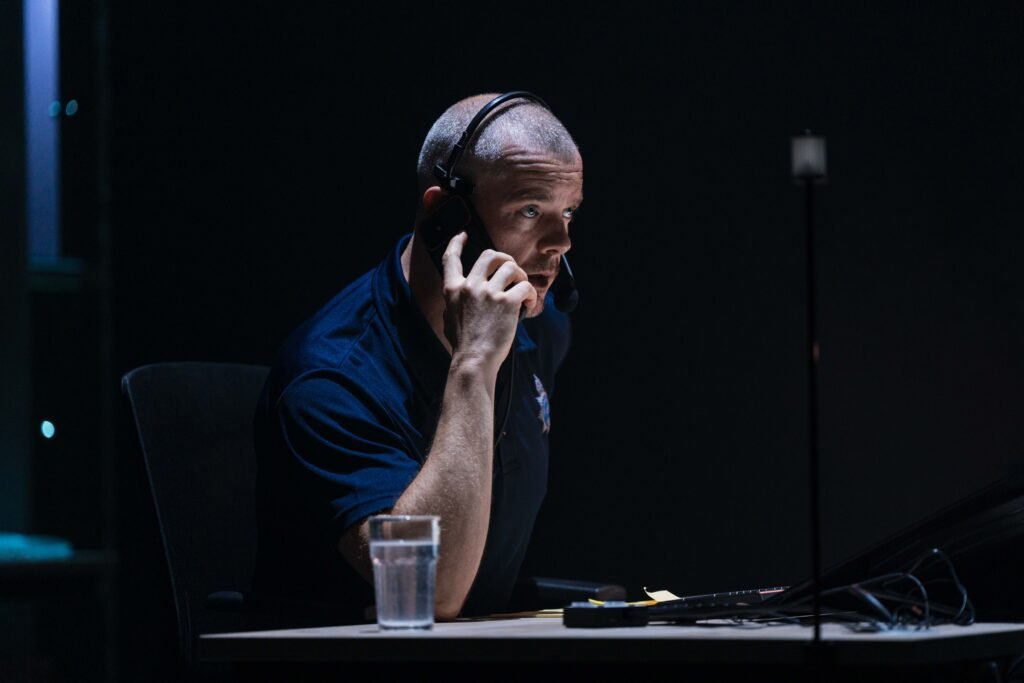
Russell Tovey in The Guilty (Photo: Helen Murray)
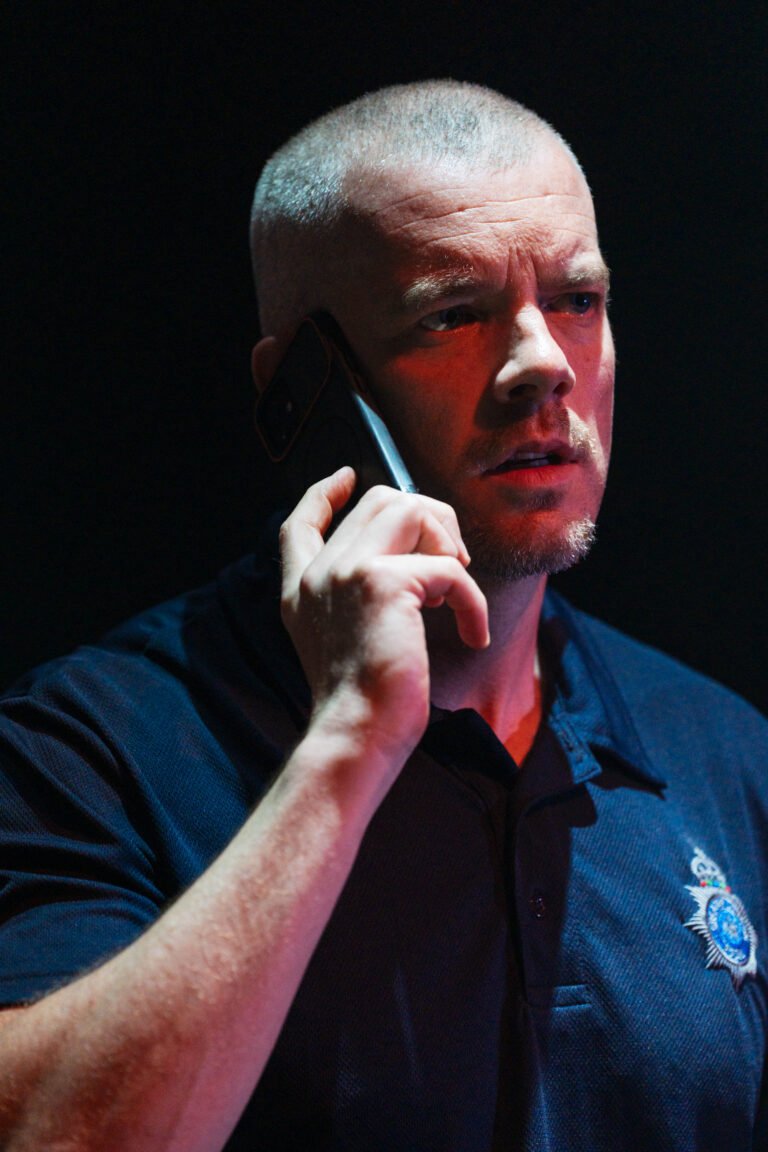
Tovey is, simply put, magnificent. This may not be a career-best performance so much as a career-defining one: stripped of anywhere to hide, he gives us a fully inhabited human being in real time; deadpan and dryly funny with the timewasting callers one moment, physically unravelling with grief and anger the next. What lingers longest is the smallness of it: a directorial instinct that favours the flicker of an expression over any grander gesture, so the audience is trained to watch for the tiniest crack in Joe’s composure and rewarded, again and again, for doing so.
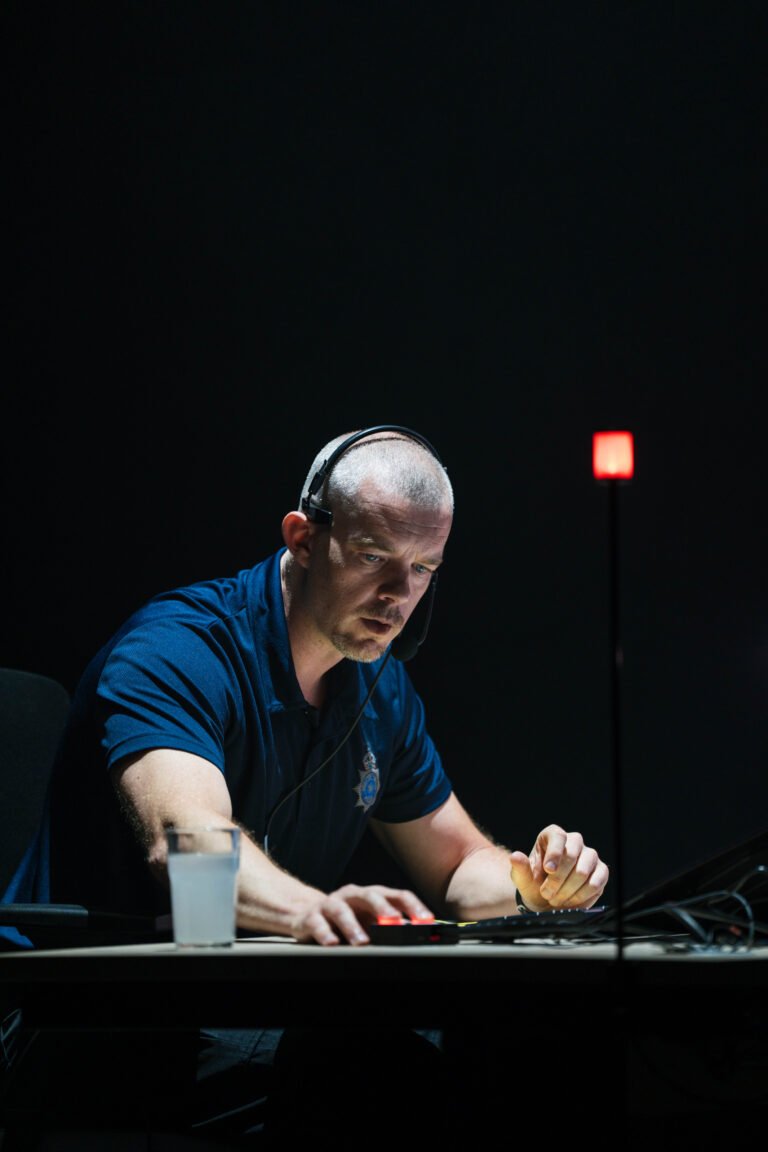
Alex Eales’s set does exactly what it needs to and nothing more: a desk, a locker, two abandoned workstations gathering dust behind him. Anna Watson’s lighting does more than the set lets on: a neon ring circles the space like a slow noose, tightening by degrees so gradually you clock the change only in hindsight. Gareth Fry’s sound design is sparer still, but every crackle and drop-out down the phone line lands with more weight than most of the dialogue. Between them, the three keep the audience as blind as Joe is: we hear what he hears and see no more than he sees, so the not-knowing sits with us exactly as it sits with him.
Russell Tovey in The Guilty (Photo: Helen Murray)
What could easily tip into gimmick, a play performed almost entirely down a headset, instead earns every minute of its taut running time, helped by a script that resists the urge to explain itself. The resolution, when it arrives, is dramatic and complete without ever feeling neatly parcelled up: Moss trusts her audience to do the final piece of the work themselves, and the effect is more powerful for it.
I went in looking for the usual quibble to file as a niggle, and came out without one. If The Guilty has a flaw, it isn’t one I found on this viewing. A remarkable hour of theatre, built almost entirely from restraint and one phenomenal central performance. Barrett and Moss trust their material and their audience in equal measure, and Tovey repays that trust many times over. Unmissable.