A Soaring, Joyful Triumph
“A journey completed in a single step is no journey at all’
Agnes Kamkwamba to her husband Trywell
William Kamkwamba was thirteen years old when, in the depths of a devastating famine that threatened to wipe out his entire village in rural Malawi, he built a windmill from scrap metal and bicycle parts and changed his family’s fortunes. It is the kind of story that could easily be flattened into worthy uplift, the sort of feel-good fable that arrives with the best intentions and leaves you mildly moved but fundamentally unchanged. This production is nothing of the sort.
Adapted from Kamkwamba’s memoir for the stage, The Boy Who Harnessed the Wind arrives at @sohoplace as something altogether rarer: a musical that earns every emotional beat it reaches for, and then reaches higher still.
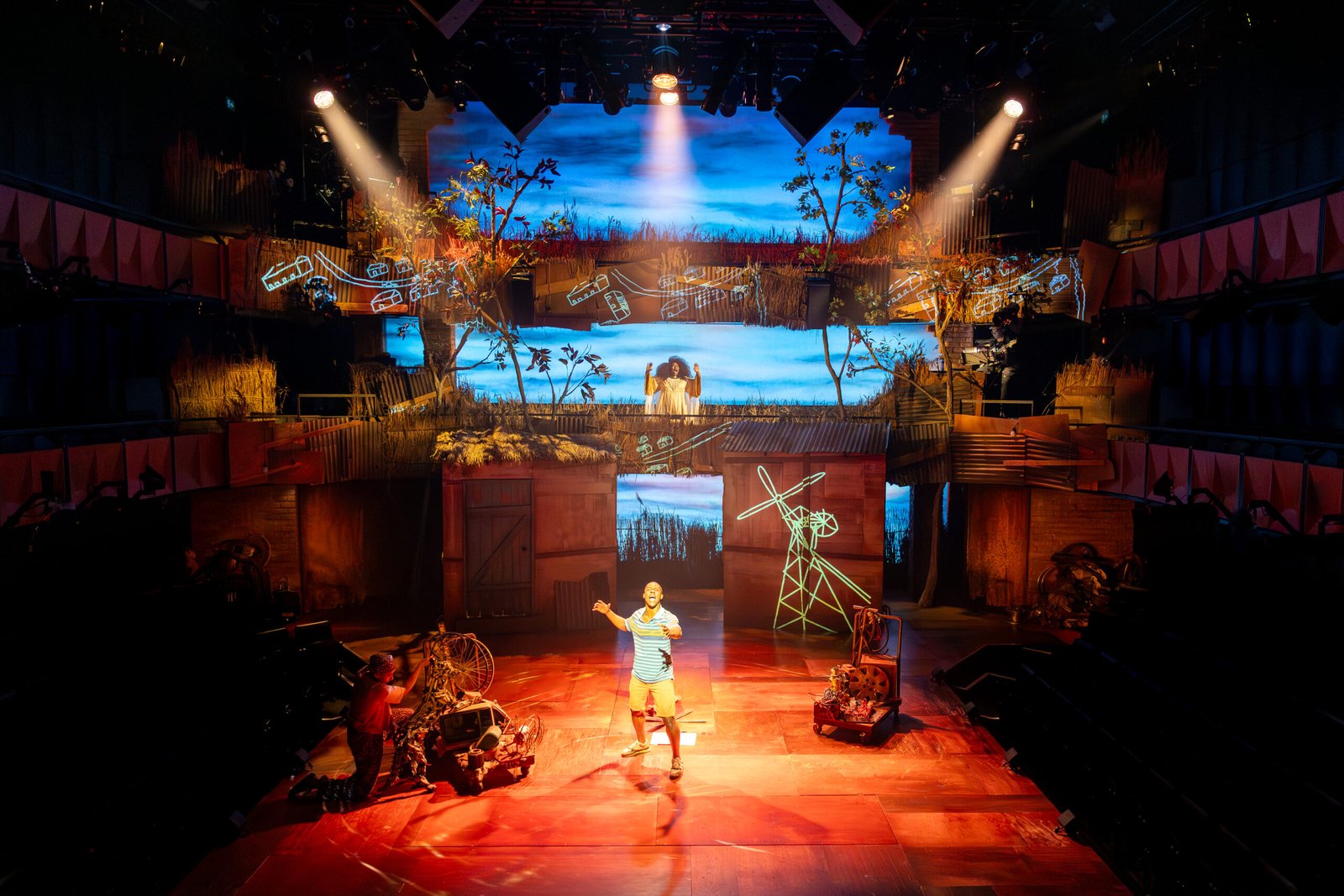
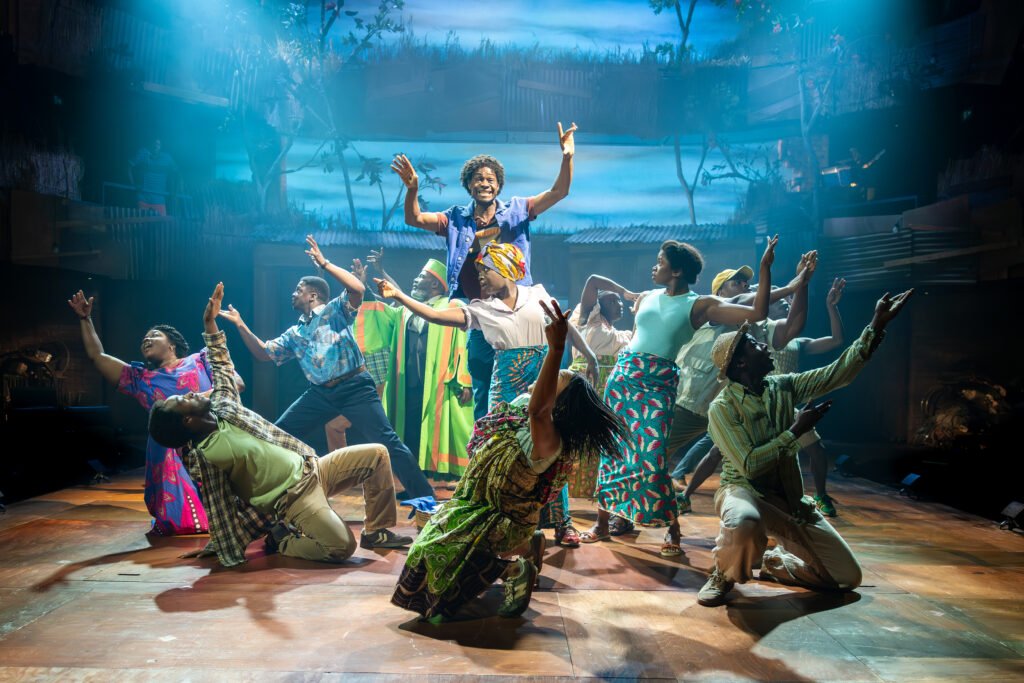
The production makes immediate and inventive use of @sohoplace’s flexible configuration, staging the show in a deep U-shape that draws the audience around three sides of the action while incorporating the full height of the three-tiered auditorium into the design. The result is a visual world that breathes. Simple, effective and uncluttered, the set transforms the main playing space into sun-baked farmland and village square alike, while the soaring backdrop stretches upward across all three levels, evoking the vast Malawian plains with an economy that lesser productions would spend a fortune failing to achieve. You feel the landscape as much as you see it.
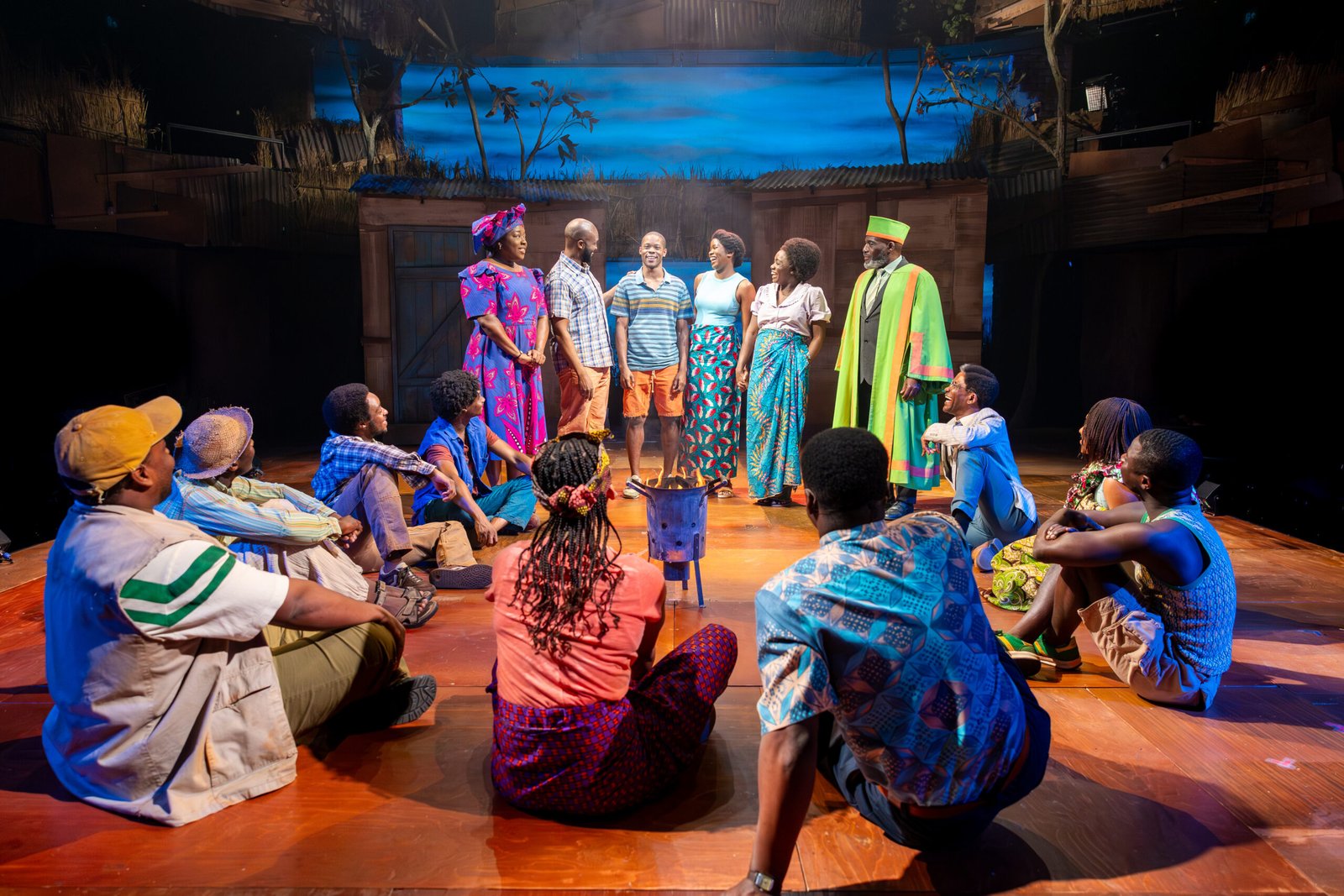
The production announces itself from the very first moment. As the audience settles, the villagers are already there, going about their daily work, greeting arrivals, moving through the space as though the world of the play has been quietly running since long before we turned up. It is a beautifully judged opening, unhurried and utterly assured, and it sets the tone for everything that follows.
At the centre of it all is Alistair Nwachukwu as William, a performance of sustained grace and physical intelligence. He carries the role not through vocal pyrotechnics or a single showstopping moment, but through sheer presence and an instinctive understanding of who this boy is and what drives him. But this is emphatically an ensemble piece, and Nwachukwu is wise enough to let it be one. The Kamkwamba family sit at the heart of the story with a warmth and specificity that makes the stakes feel genuinely personal, and William’s friendship with Gilbert (Idriss Kargbo) pulses with the kind of easy, lived-in tenderness that is surprisingly hard to manufacture on stage. The story belongs to all of them.
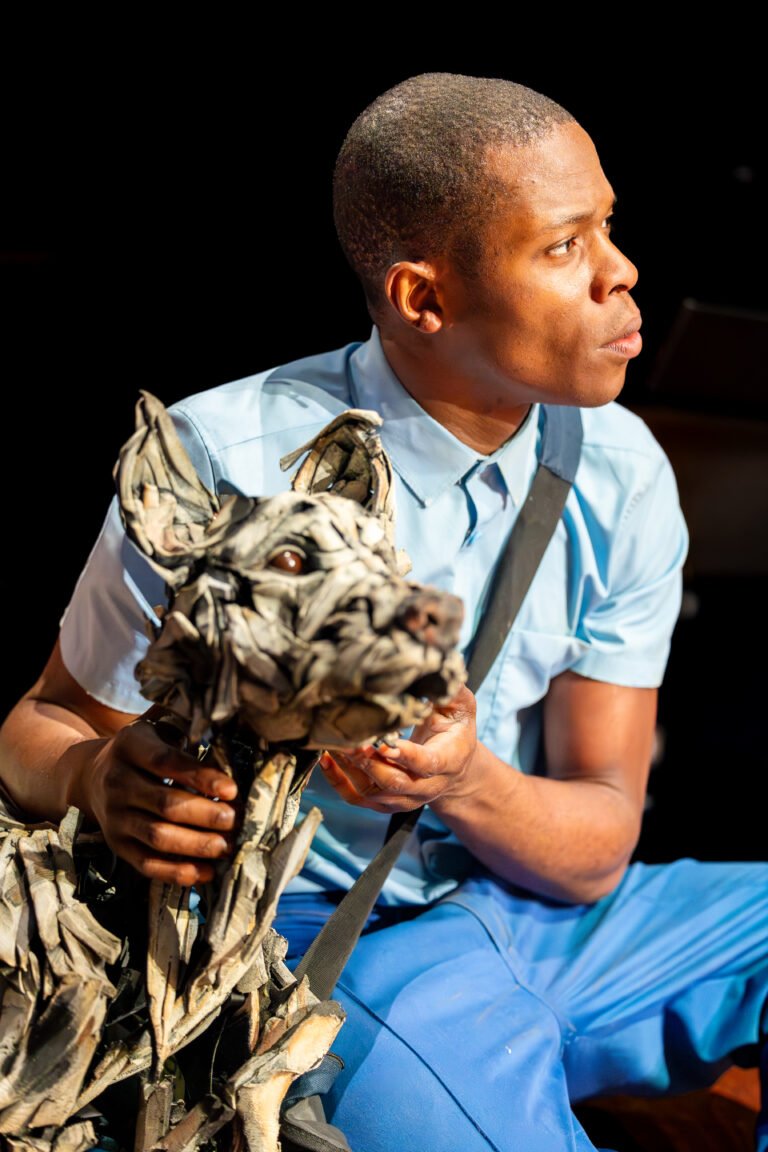
Nowhere is that more true than in William’s relationship with his father (Sifiso Mazibuko), which provides the show’s dramatic backbone. As the famine tightens its grip and desperation sets in, the father retreats into what he knows: the old ways, the old certainties. William’s vision of a different future, once indulged, becomes an affront he cannot bear. He becomes his son’s most vocal opponent, and watching that rupture unfold, and the gradual, hard-won shift that follows as his wife (Madeline Appiah) and members of the village push him to see past his own fear, is where the production finds its deepest emotional heft. It is quietly devastating, and then quietly redemptive, in the way that only good storytelling can manage.
The score is another of the production’s many achievements. This is not a musical built around a handful of showstoppers with filler in between. Every song earns its place, and each one does a different kind of work: setting the scene, driving the narrative forward, heightening an emotion that words alone could not sustain.
The musical language is wide and genuinely exciting, moving between traditional African rhythms and vocal stylings, the reggae and ska inflections of music that has travelled and evolved, and the more familiar grammar of musical theatre. Occasionally, when the score shifts into that more conventional musical theatre register to serve a moment of narrative progression, it lands with the faintest jolt, only because what surrounds it is so distinctively and confidently itself.
It is less a flaw than a measure of how fully the production inhabits its own musical world. Everything coheres; it is simply that the traditional register soars so completely that the more familiar idiom feels, momentarily, like a different show knocking at the door.
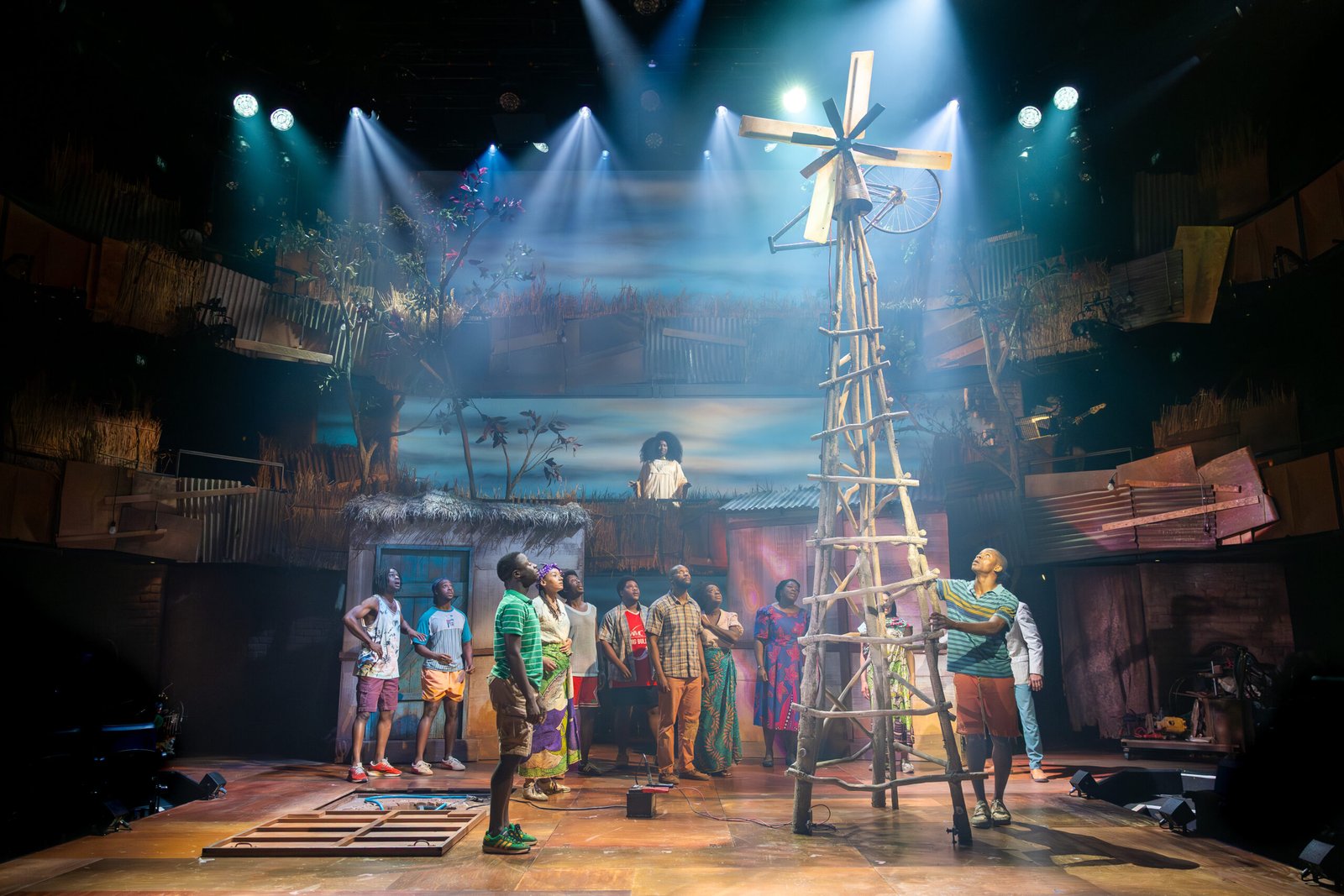
Much of the credit for this belongs also to Shelley Maxwell’s choreography. Movement here is not decoration. When the cast erupt into song and dance at key moments of heightened feeling, it carries the weight of genuine cultural expression: the sense that at certain moments, singing and dancing is simply what the body does because words are not enough. That is not easy to achieve and it is managed here with a fluency that makes it look entirely natural.
From that unhurried opening to a finale that is simply, unashamedly joyous, The Boy Who Harnessed the Wind is the kind of show that reminds you what musical theatre, at its best, is for: to tell a story so powerfully, so authentically, and with such humanity that it leaves you feeling something you did not expect to feel when you sat down.
Emotional, energetic, colourful and ultimately joyous, this is a production that earns every standing ovation it gets. Rooted in Malawian culture without ever feeling parochial, driven by a score that ranges from traditional African rhythms to reggae and ska and back again, and carried by an exceptional ensemble with Alistair Nwachukwu quietly outstanding at its heart, this is musical theatre doing exactly what it should. A soaring, beautiful, authentically told triumph.
Five stars from Theatrevibe, the site that doesn’t do stars!
Musical Numbers
Act One
Tawirizana (Welcome Song)
Prologue
Where Did That Boy Go
Something More Than Magic
Where Did That Boy Go (Reprise)
For Tomorrow
Something More Than Magic (Reprise 1)
Mphala Boys Power
Kaya Wiyo
The Girl in the Market Place
Something More Than Magic (Reprise 2)
This I Know
Muluzi / Mughals Ndi Inetu
Act Two
It Won’t Work William
Mundilandiretu
(Jesus My Lord to Thee I Cry)
The Girl in the Market Place (Reprise)
You’ll See
Whole Day We Cry/Annie’s Letter
One Less (The Hyena)
Show A Child The Sky
This I Know (Reprise)
Akama M’guitsa (Work Song)
With Every Turn
Production Notes
The Boy Who Harnessed the Wind
Cast
Alex Okoampa
Eddie Elliott
Helena Pipe
Idriss Kargbo
Lori Barker
Madeline Appiah
Newton Matthews
Sifiso Mazibuko
Tomi Ogbaro
Yana Penrose
Shaka Kalokoh
McCallam Connell
Alistair Nwachukwu
Choolwe Laina Muntanga
Tsemaye Bob-Egbe
Owen Chaponda
Creatives
Director: Lynette Linton
Choreographer: Shelley Maxwell
Designer: Frankie Bradshaw
Musical Director: Ashton Moore
Lighting Designer: Oliver Fenwick
Sound Designer: George Dennis
Video/projection designer: Gino Ricardo Green
Puppet designer: Nick Barnes
Puppetry director: Laura Cubitt
Fight Director: Kate Waters
Information
Running Time: Two hours 45 minutes with an interval
Booking until 18th July 2026
Theatre:
@sohoplace
4 Soho Place
London W1D 3BG
Tube: Tottenham Court Road
Telephone: 020 384 09611
Access: 0330 3335962
Website: www.sohoplace.org
Reviewed by Sonny Waheeed
@sohoplace on 14th May 2026