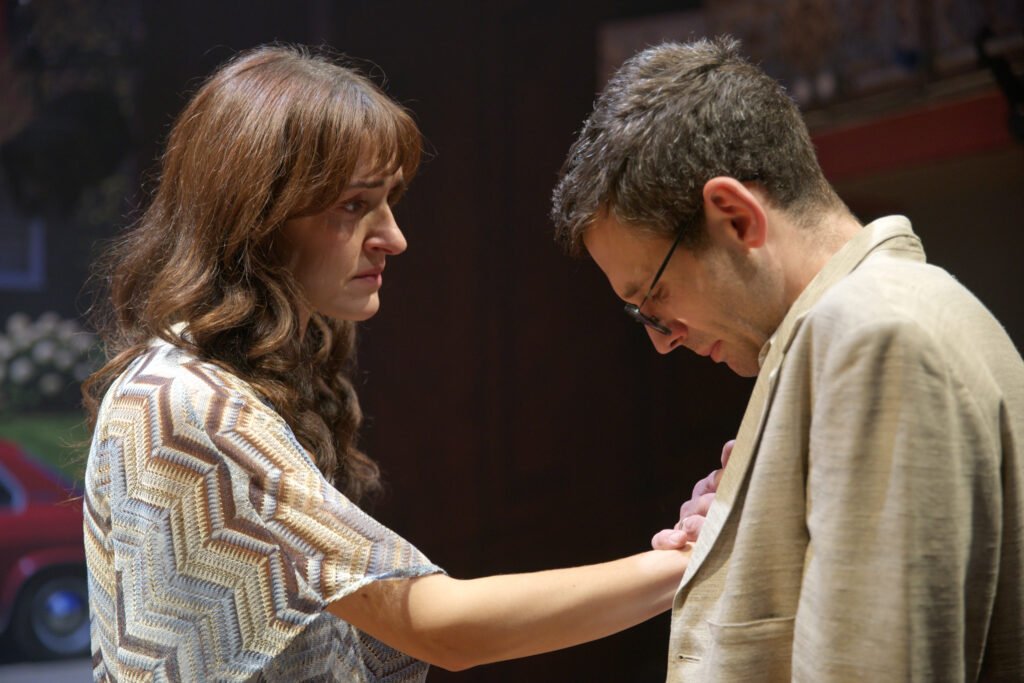
“His ballet did not give an accurate picture of life in peasant farms.”
Katya
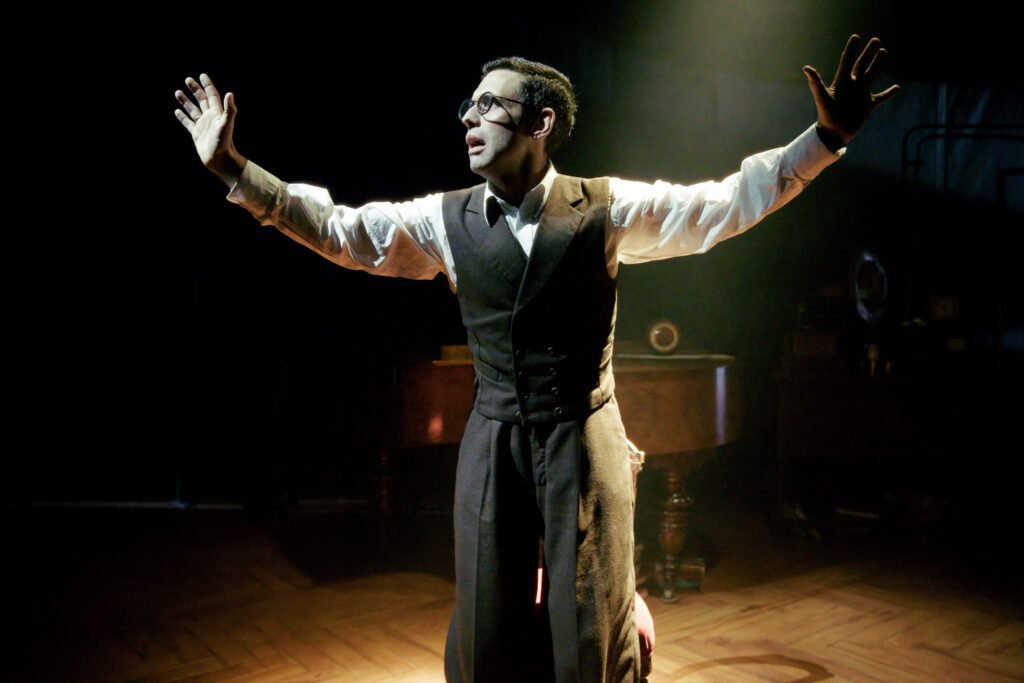
Benjamin O’Mahony as Dmitri Shostakovich (Photo: Mark Douet)
I am immensely grateful to Rosalind Adler and Lea Sellers for introducing me to the music of the Russian composer Dmitri Shostakovich through their play Holy Fool. What I didn’t know was so many Twentieth Century Russian composers as well as writers, fell foul of Stalinist Russia.
In 1948 a Russian government decree, the Zhdanov Doctrine published on 11 February, denounced six artists—Shostakovich, Prokofiev, Khachaturian, Shebalin, Popov and Myaskovsky, in that order—for the crime of “formalism”. Formalism was described as a “renunciation of the basic principles of classical music” in favour of “muddled, nerve-racking” sounds that “turned music into cacophony”. This act of censure against these composers lasted until the death of Stalin in 1953.
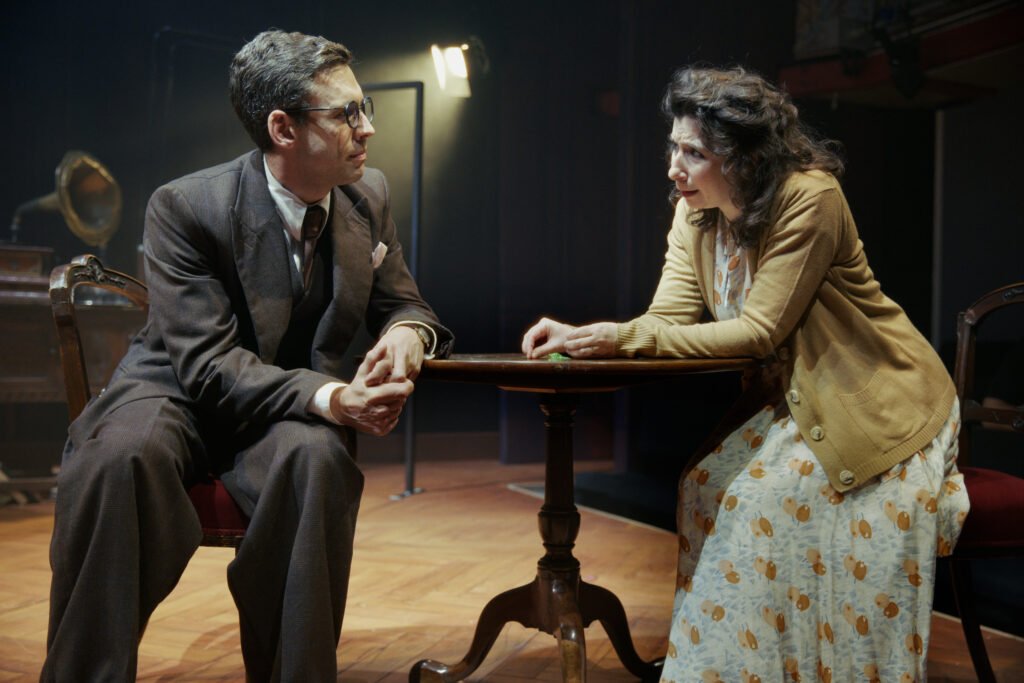
Benjamin O'Mahony as Dmitri Shostakovich and Jenna Augen as Nina his wife (Photo: Mark Douet
The play opens in 1936 when Shostakovich was 30, and his pregnant wife, physicist Nina (Jenna Auger) describes him as “our very own Soviet Mozart!” His 1934 opera Lady Macbeth of Mtsensk was initially well received until Stalin condemned it from the audience and Pravda published a damning article which led to the Zhdanov condemnation. Shostakovich was accused of being a member of the intelligentsia and threatened with imprisonment.
As a result of the 1936 Purge, Shostakovich’s Fourth symphony was not performed until 1961. In the play we see it was hidden under the floorboards in his home. Shostakovich’s response in 1937 was to write the Soviet pleasing Fifth Symphony. It was his Seventh Symphony which celebrated Leningrad’s resistance during the Second World War against Hitler’s German invasion. We feel throughout the play the pressure on Shostakovich to conform politically and to stifle his own creativity.
By 1946 he is revered and rewarded with a special apartment in Moscow. Representing a Soviet revolutionary is a young woman Katya (Phoebe Pryce), the daughter of a plumber who appears waving a large red flag and says that Shostakovich’s ballet, “The Limpid Stream” did not give an accurate picture of life in the peasant farms.
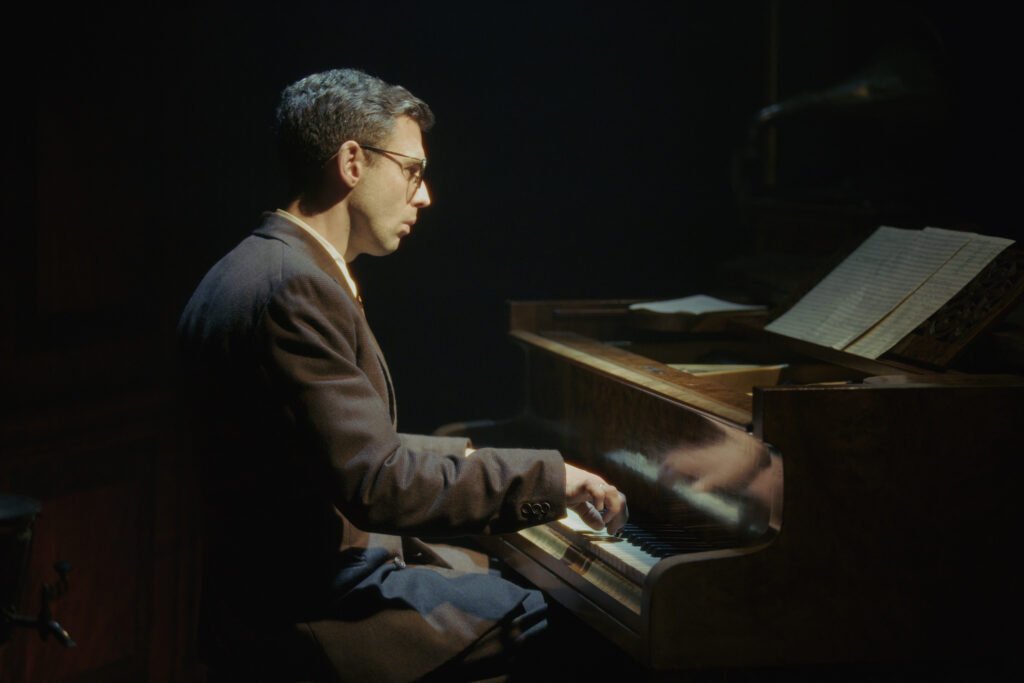
Benjamin O’Mahony as Dmitri Shostakovich (Photo: Mark Douet)
The second act opens with the news that Shostakovich’s friend Vissarion Shebalin has been tortured and kicked. Shostakovich says he will not go to New York but in 1949 he does go but is unable to say what he really feel about musicians being condemned as “enemies of the people” by Russia. There is a press conference where American journalists try to get him to criticise the Soviet policy on art.
Nina dies and Shostakovich has two less successful marriages. He visits Katya in America.
The play is dense with a serious understanding of the issues facing Shostakovich. The performances are strong and believable. Benjamin O’Mahony also plays the piano for us and we hear the repetition of his famously tuneful and lyrical Waltz No 2.
I congratulate the Park and director Kate Fahy for this informative production and would welcome seeing it again.
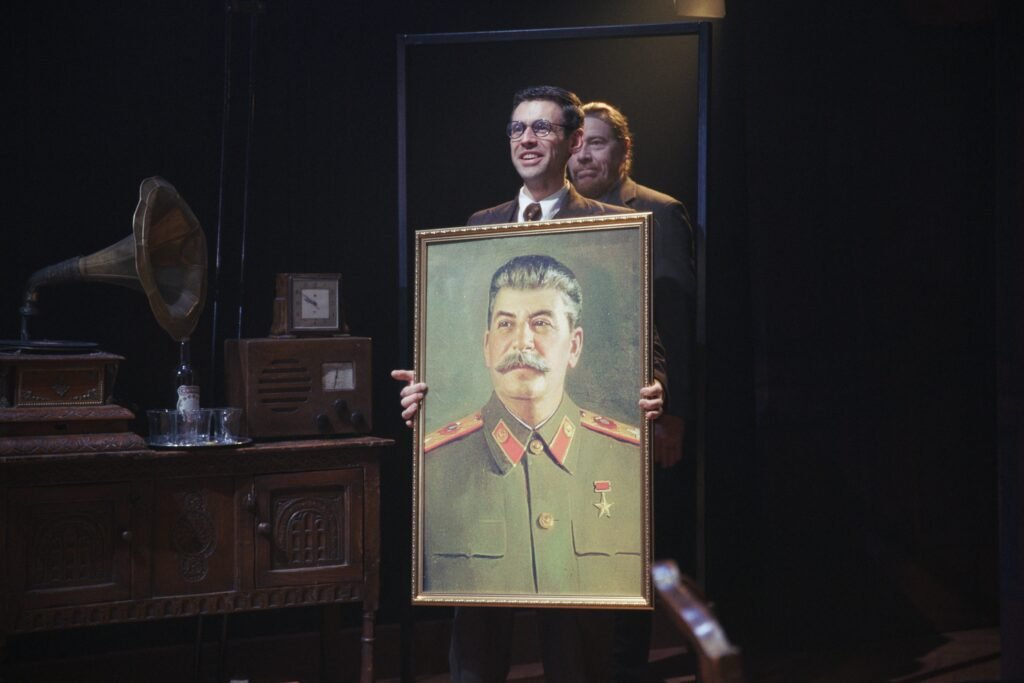
Benjamin O’Mahony as Dmitri Shostakovich and Fergus O'Donnell as Isaac (Photo: Mark Douet)