

Superb Revival for the late, great Tom Stoppard’s play
about India
FLORA And it’s called a duck bungalow …
MRS SWAN Dak bungalow.
FLORA … although there is not a duck to be seen
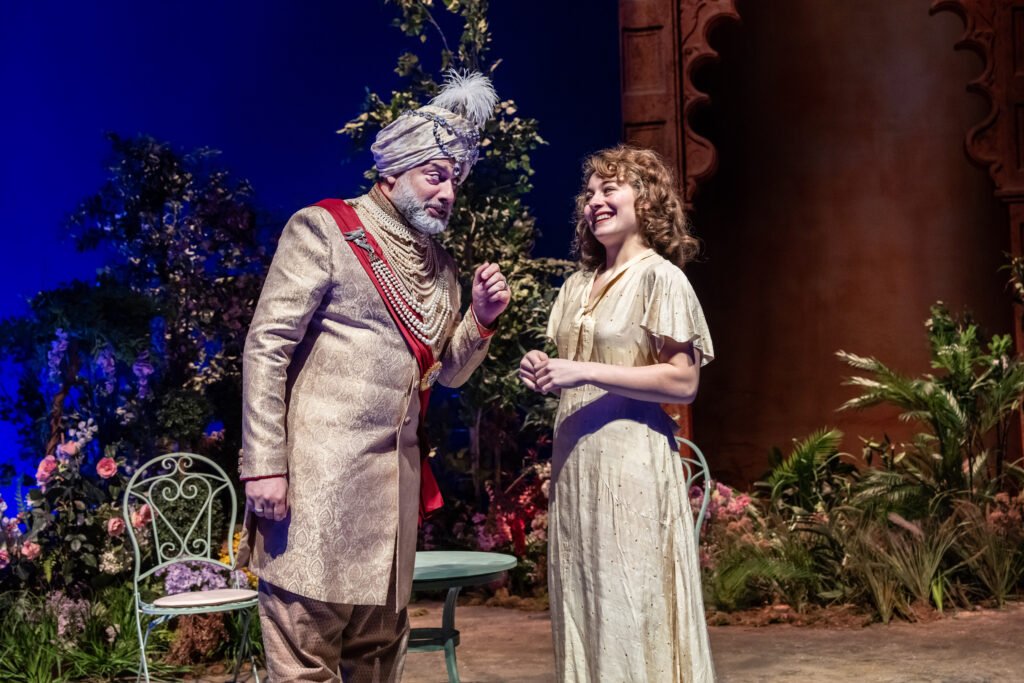
Within minutes it became clear that this is a well‑written play with engaging dialogue and strong performances. Written in 1995 and adapted from his 1991 radio play, the late and much‑lamented Tom Stoppard sets the story in India, where he spent part of his childhood during the Second World War. It takes little imagination to feel transported there.
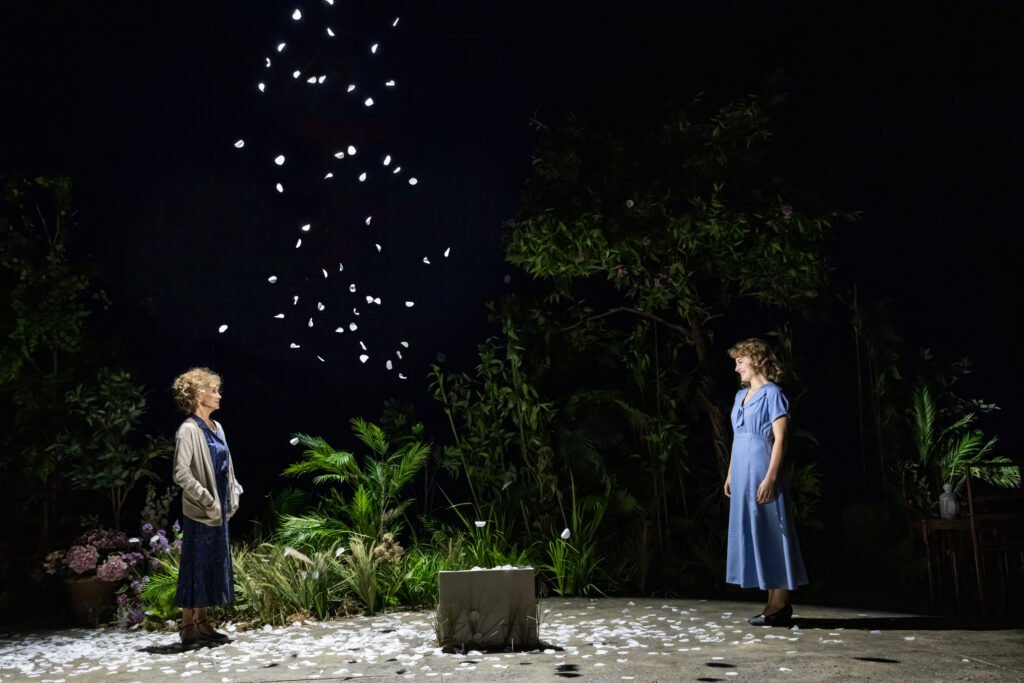
The play moves seamlessly between the present day and the mid‑1930s centring on two sisters. The younger, Eleanor Swan née Crewe (Felicity Kendal), recounts to researcher Eldon Pike (Donald Sage Mackay) the letters and sent by her older sister and shows him the portraits of Flora Crewe (Ruby Ashbourne Serkis). Flora died, probably of consumption, in India at the age of 35. Eleanor is later visited by Anish Das (Aaron Gill), the son of Nirad Das (Gavi Singh Chera), a painter and one of Flora’s suitors.
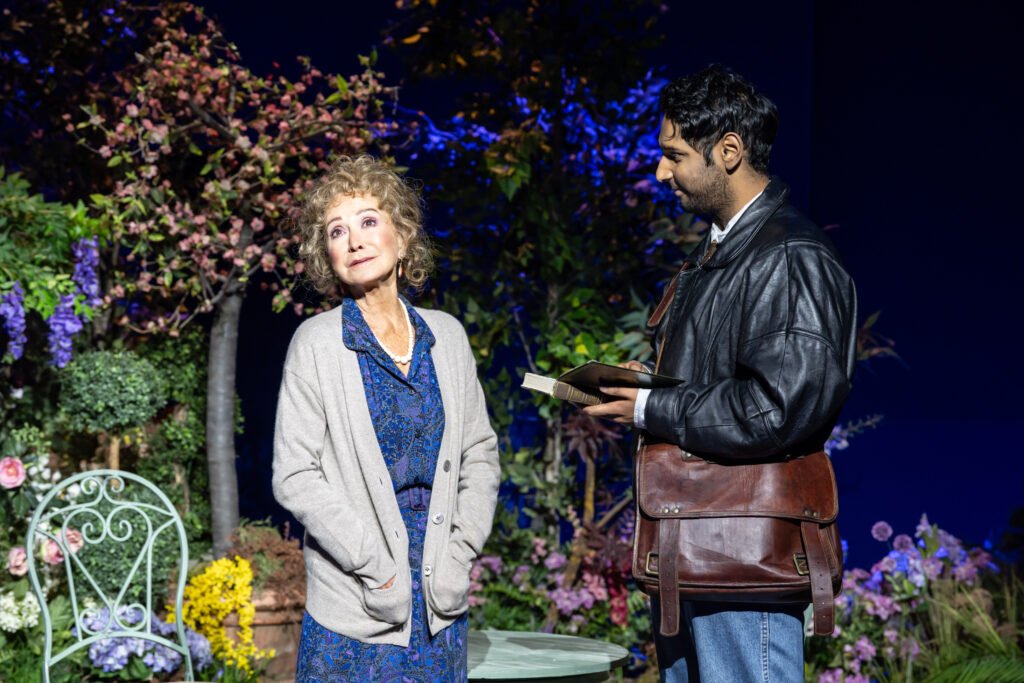
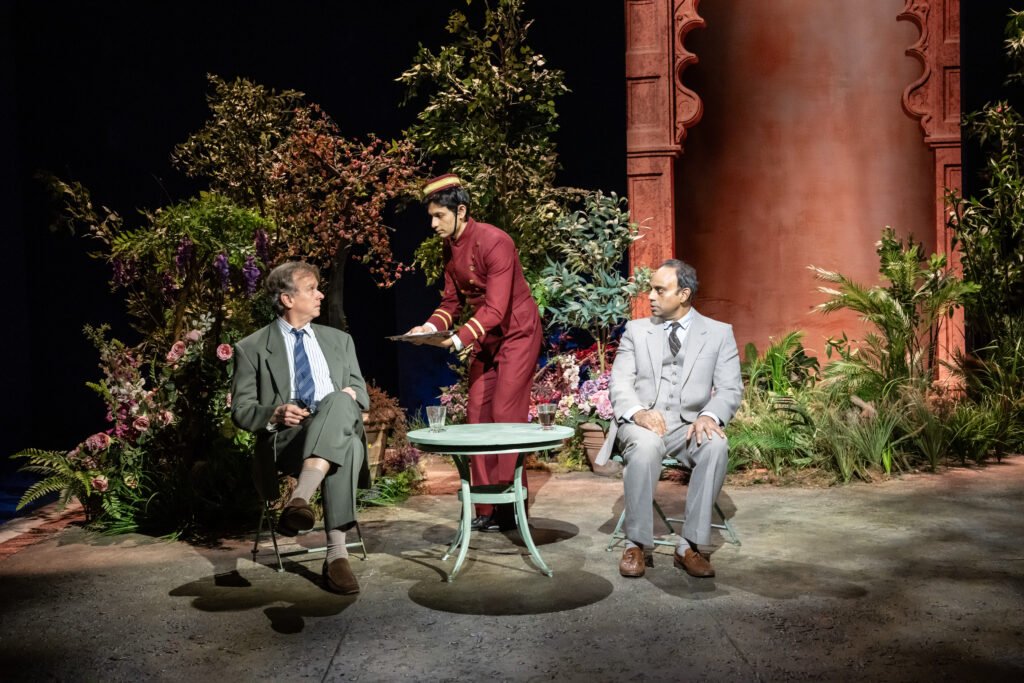
The staging is cleverly designed, using solid backdrops to depict gardens, hills, and the two‑room house where Flora lived for a time in India. This allows for smooth transitions as the story unfolds. The historical setting is significant: at the time, Great Britain was still proclaiming that “the sun never sets on the Empire”. Britain governed in South Asia countries that are now India, Pakistan, Bangladesh and Sri Lanka, then home to over 100 million people. Because of the vast distances involved, the British administration allowed local rulers a degree of autonomy, though ultimate authority remained in London. The early rumblings of independence are present, a struggle not resolved, and then with conflict, until after the Second World War in August 1947.
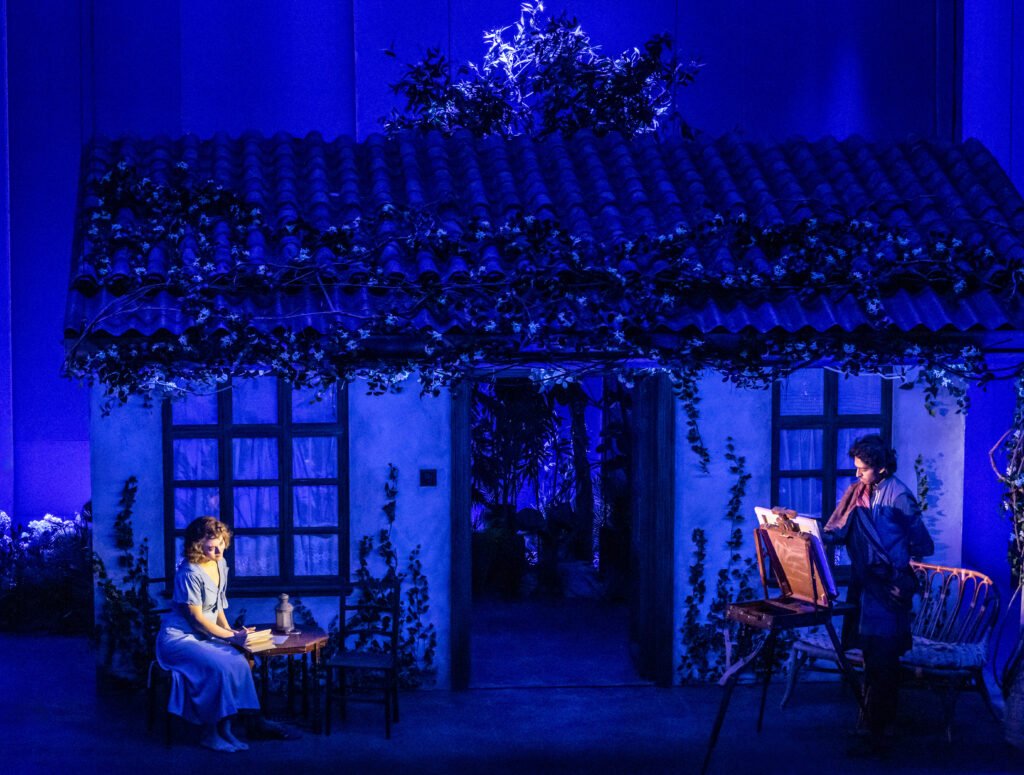
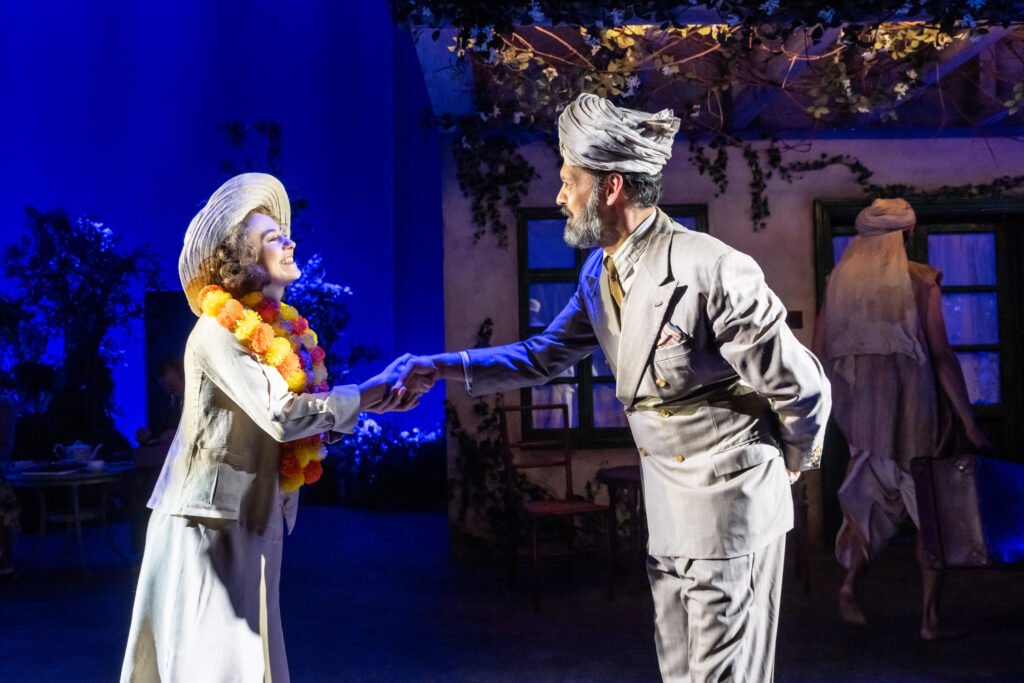
Flora, a poet recently arrived from England and planning a tour despite her declining health, finds herself courted by the Maharaja (Irvine Iqbal), the British officers stationed there and a talented portrait painter, Nitad Das (Gavi Singh Chara). Each plays a brief but meaningful role in her life.
The British often treated foreign postings as opportunities to relax their usual standards of behaviour Kenya had its “Happy Valley,” and in India the arts flourished, including a vogue for nude portraiture. When Mrs Swan entertains guests with tea and cake, she recalls fragments of the past and discovers a partially finished nude painting of Flora.
Director Jonathan Kent has worked skilfully with the cast, all of whom deliver believable performances. Ruby Ashbourne Serkis is particularly impressive; on stage for most of the play, she captures Flora’s determination to live each day fully, knowing her time is limited. Felicity Kendal brings just the right balance of presence and gentle eccentricity to Eleanor, a woman entering the early stages of dotage. As a small piece of trivia: when the play premiered in 1995, Kendal played Flora; now she portrays the surviving sister.
The ending is both sad and uplifting. The audience, myself included, clearly enjoyed a thoughtful, well‑directed, and beautifully performed production. I intend to see it again before it closes.
Production Notes
Indian Ink
Written by Tom Stoppard
Directed by Jonathan Kent
Cast
Starring:
Felicity Kendal
Donald Sage Mackay
Evan Milton
Gavi Singh Chera
Mark Carlisle
Neil D’Souza
Sagar Arya
Tom Durant-Pritchard
Irvine Iqbal
Aaron Gill
Ruby Ashbourne Serkis
Bethany Muir
Sushant Shekhar
Creatives
Director: Jonathan Kent
Composer: Kuljit Bharma
Set Designer: Leslie Travers
Costume Designer: Nicky Shaw
Choreographer: Jack Murphy
Lighting Designer: Peter Mumford
Sound Director: Christopher Shutt
Information
Running Time: Two hours 45 minutes including an interval
Booking to 31st January 2026
Theatre:
Hampstead Theatre
Eton Avenue
Swiss Cottage
London NW3 3EU
Phone: 020 7722 9301
Tube: Swiss Cottage
Reviewed
by Malcolm Beckett at
Hampstead Theatre
on 18th December 2025